Rats
Rat Pest Control in Central & Southeast Pennsylvania
Rats are not the kind of pest problem most homeowners delay. A quick action plan is the best approach.
These critters can move through wall voids, basements, crawl spaces, garages, sheds, trash areas, and outdoor harborage spots, often without being seen. By the time you notice droppings, gnaw marks, noises, or a live rat, there may already be more activity nearby.
Dominion Pest Control provides rat pest control services throughout Berks, Chester, Cumberland, Dauphin/Hershey, Lancaster, Lebanon, and York Counties. If you suspect rats around your home or business, our team can inspect the property, identify activity areas, recommend treatment, and help you reduce the conditions that make rats want to stay.
How to Tell If You Need Rat Pest Control
You may need professional rat pest control if you are seeing, hearing, or smelling signs of rodent activity, especially around food, trash, storage areas, garages, basements, attics, crawl spaces, sheds, or outdoor feeding areas.
Rats are cautious and very good at hiding. You may not see them during the day unless activity is heavy, but you may notice the evidence they leave behind. Common warning signs include dark pellet-like droppings, scratching noises at night, chew marks on wood or wiring, holes around the foundation, damaged food packaging, or a strong ammonia-like odor. Evidence of their presence is like mice infestation.
Rats vs. Mice: What’s the Difference?
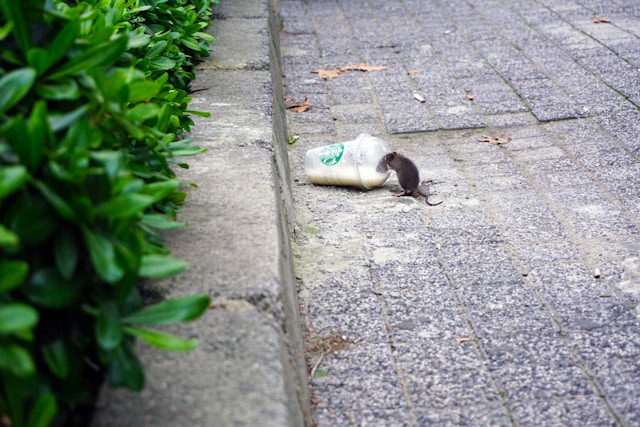
Rats and mice are both rodents, but they do not behave the same way. Correct identification matters because the inspection, baiting, trapping, exclusion, and prevention strategy may differ.
Rats are larger than mice, with larger bodies, stronger teeth, and the ability to cause more noticeable damage. Rat droppings are usually larger than mouse droppings and may be found near food sources, along walls, in garages, and in hidden areas.
Mice are smaller and can squeeze through very small openings, which means they may spread more easily through cabinets, pantries, wall voids, and cluttered storage areas. Rats, on the other hand, are often more cautious and may avoid new traps or objects in their environment. Rat activity is also more likely to point to an outdoor issue, such as burrows, trash, compost, bird feeders, or food sources near the home.
While mouse control and rat control should be addressed quickly, with rats, the size of the animal and the potential for burrowing, gnawing, and structural access make professional inspection especially important.
What Are the Most Common Types of Rats in Pennsylvania?
Understanding the specific type of rats in your home might help determine a more targeted approach. Keep in mind, the primary threat of hantavirus comes from the white-footed mouse and the deer mouse (not rats).
NORWAY RAT
The two rat species most often discussed in Pennsylvania pest control are the Norway rat and the roof rat, also called the black rat. For Dominion Pest Control’s service areas, the rat homeowners are most likely to deal with is the Norway rat, also known as the brown rat, sewer rat, barn rat, or water rat. (English naturalist John Berkenhout mistakenly believed that these rats had recently migrated to England on Norwegian lumber ships).
Norway rats are larger, heavier-bodied rats commonly associated with ground-level activity. They often live in burrows, basements, crawl spaces, garages, sewers, trash areas, sheds, barns, and lower levels of buildings. They are strong gnawers, good swimmers, and highly adaptable.
In Pennsylvania homes and businesses, Norway rat activity is often connected to trash storage, dumpsters, bird feeders, pet food, compost piles, livestock or animal feed, dense vegetation, and gaps around foundations or utility lines.
ROOF RAT
Roof rats are more common in warmer climates, but they can sometimes be found in Pennsylvania. They are better climbers than Norway rats and are more likely to travel above ground, along trees, vines, fences, roofs, attics, and utility lines.
In Dominion’s Pennsylvania service areas, roof rats are less likely than Norway rats, but they may still be considered during an inspection if the activity appears to be high in a structure, attic, roofline, or tree-connected area.
When Are Rats Most Active Near Me?
Rats are usually most active at night, especially when a home or business is quiet. You may hear movement after dark in walls, ceilings, crawl spaces, garages, or storage areas.
In Central and Southeast Pennsylvania, rat activity can happen year-round, but homeowners may notice it more when outdoor conditions change. Activity can increase during colder months when rats look for warmth and shelter. Heavy rain, construction, flooding, or changes to nearby trash and food sources can also push rats into new areas.
You may notice rat activity near trash pickup days, around bird feeders, near pet food, in garages, around sheds, near gardens, or in neighborhoods with dumpsters, vacant buildings, alleyways, or dense landscaping.
If you hear noises at night but rarely see anything during the day, that does not mean the issue is minor. Rats prefer hidden travel routes and may stay out of sight until the infestation becomes more established.
What Are the Signs of a Rat Infestation?
Rat infestations can be difficult to spot early because rats avoid open spaces and often travel along walls, edges, pipes, foundations, and concealed routes.
One of the most common signs is droppings. Rat droppings are usually dark, pellet-like, and larger than mouse droppings. You may find them in garages, basements, cabinets, under sinks, near pet food, behind appliances, in sheds, or around stored items.
Gnaw marks are another warning sign. Rats chew on wood, plastic bins, wires, food bags, cardboard boxes, baseboards, insulation, and pipes. You may also hear scratching, scurrying, or movement in walls, ceilings, floors, or attics, especially at night.
Other signs include dark rub marks along walls or baseboards, burrows near foundations or sheds, shredded nesting material, damaged food packaging, and strong odors in enclosed areas. A live rat sighting, especially during the day, should be addressed quickly because daytime activity may suggest a larger or more established issue.
| Season | What Typically Changes | Where Rat Activity May Show Up | What Homeowners May Notice | Best Prevention Focus |
| Winter | Cold weather pushes rats to look for warmth, shelter, and dependable food sources. | Basements, garages, crawl spaces, wall voids, sheds, barns, and trash storage areas. | Scratching at night, droppings indoors, chewed storage items, damaged insulation, or activity near pet food and trash. | Seal gaps around the foundation, garage doors, utility lines, vents, and basement access points. Keep food and trash tightly contained. |
| Spring | Warmer weather increases movement, nesting, and breeding activity. Rain can also disturb outdoor burrows. | Landscaping, gardens, patios, sheds, compost areas, woodpiles, and foundation edges. | New burrow openings, outdoor droppings, gnaw marks, activity near bird feeders, or rats moving closer to the home after heavy rain. | Clean up winter debris, trim vegetation, move stored materials away from the home, and inspect for entry points before populations grow. |
| Summer | Rats remain active outdoors where food, water, and cover are easy to find. | Trash bins, dumpsters, outdoor dining areas, gardens, pet feeding stations, chicken coops, barns, and dense landscaping. | Activity near garbage, compost, bird seed, fallen fruit, grills, or outdoor pet food. Homeowners may also notice burrows near sheds or patios. | Control food sources. Keep trash sealed, clean outdoor eating areas, remove spilled seed, manage compost, and reduce standing water. |
| Fall | Cooler nights encourage rats to move closer to structures before winter. | Garages, sheds, basements, crawl spaces, attics, and areas around doors or foundations. | Increased nighttime noises, droppings near entry points, chewed weatherstripping, or signs around storage areas. | Do a fall exterior inspection. Seal holes, repair garage door gaps, clear clutter, and reduce outdoor harborage before cold weather sets in. |
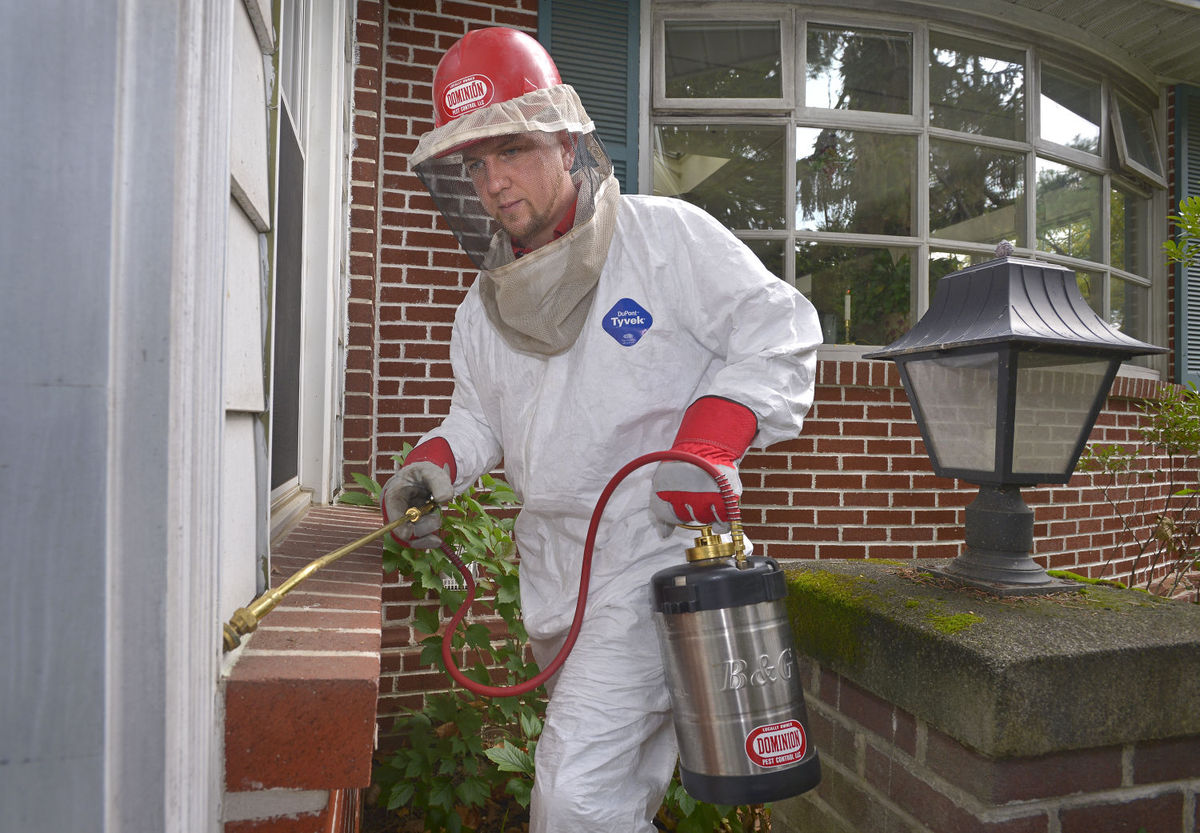
The fastest way to get control of rats is to combine inspection, source reduction, trapping or baiting, and exclusion. DIY methods can sometimes catch individual rats, but they often fail when the larger problem is hidden entry points, outdoor food sources, or multiple rats moving through different areas. Read The Dangers of Self-Treating for Pests
Dominion Pest Control suggests the following:
- Remove steady food sources. Rats prefer to hang out near a constant food source, like trash receptacles, bird feeders, pet food, compost, gardens, or animal feed. Reducing access to food is one of the most important first steps.
- Inspect around the whole property. Rats are very good at hiding and may change locations frequently. Because one rat can indicate more nearby, inspect your home, garage, shed, basement, crawl space, foundation, trash area, and landscaping (or hire one of our professional pest technicians to conduct a thorough inspection.)
- Use caution with all devices. When capturing or killing a rat, be careful with traps, bait stations, and any control device. Keep them out of reach of children, pets, and non-target animals.
- Rat poisons. Poison baits are one of the most common rat control tools. They work by attracting rats to bait stations and delivering a toxic bait. If used, bait must be handled carefully, placed strategically, and kept fully enclosed. Always read and follow label directions.
- Snap traps. Snap traps lure rats with bait and close when triggered. They are often placed along walls, in dark travel routes, and near known activity. Peanut butter is commonly used as bait. Traps should be checked often, and captured rats should be disposed of safely. Professional follow-up can help identify entry points, nesting areas, and food sources that are keeping the problem active.
- Glue boards. Glue boards are designed to trap rodents when they walk across the adhesive surface. They are available at many hardware stores, but they are not always the preferred option. They can be stressful, messy, and less effective for larger rats, if not used correctly. Our professional pest technician can determine whether glue boards are appropriate, place them in safer and more strategic locations, monitor activity, and recommend other control methods if the infestation requires a stronger approach.
- Seal access points. Trapping or baiting alone may not solve the problem if rats can keep entering. Gaps around doors, foundations, vents, utility lines, and garage seals should be evaluated.
- Call a professional if activity continues. Rats can be difficult to eliminate without knowing their routes, food sources, harborage areas, and entry points. Dominion Pest Control can inspect the issue and recommend a targeted control plan.
The final method for how to get rid of rats depends on the severity of the infestation and location.
Natural Pest Control for Rats
Dominion Pest Control offers green pest control options for customers who prefer lower-impact solutions whenever possible. Dominion’s green pest control program uses botanical-based Nature-Cide® products made with natural ingredients such as essential oils. These services are designed to reduce chemical exposure while supporting safer indoor and outdoor environments.
For rats, natural pest control is usually best understood as deterrence and prevention, not a stand-alone solution for a heavy infestation. A natural or lower-impact rat control plan may involve exterior repellents where appropriate, habitat reduction, food source removal, trash and sanitation improvements, entry point recommendations, ongoing monitoring, and green pest control products when they fit the situation.
For more severe rat infestations, conventional control methods may still be needed. Dominion can prioritize low-impact options whenever possible while still recommending stronger treatment methods when they are necessary for effective control.
Common Options We Do Not Recommend
Some rat control ideas may sound tempting, especially when you want the problem to be gone quickly. However, overly aggressive or poorly planned methods can create safety issues, odors, property damage, or unnecessary risk.

- Loose poison placement. Rodent bait should not be scattered in open areas where children, pets, or non-target animals could access it.
- Using outdoor bait indoors without a plan. Improper bait use can lead to dead rodents in walls or inaccessible spaces, creating odor problems.
- Flooding burrows without knowing the structure. This can push rats into new areas, damage soil around foundations, or fail to address the main colony.
- Blocking holes before control is underway. Sealing rats inside can cause them to chew new exit routes or die in wall voids.
- Homemade chemical mixtures. DIY chemicals, harsh cleaners, fumes, or improvised poisons can be unsafe and may not solve the infestation.
- Relying only on ultrasonic devices. Sound devices may seem convenient, but they should not be relied on as the primary solution for infestation.
- Using pets as pest control. Cats and dogs may notice rats, but they should not be expected to solve an infestation. Rats can bite, escape, hide, and continue reproducing.
- Ignoring the outdoor source. Killing one or two rats indoors will not fix the problem if food, trash, burrows, or entry points remain outside.
What’s My Next Step for Rat Control?
Choose peace of mind. If you suspect you have a rat infestation, use our form at the right to start living pest-free. Dominion Pest Control will get in touch as soon as possible.
Rat control starts with an inspection. After a professional exterminator evaluates your home or building, Dominion can recommend a treatment plan and provide a quote for rat removal and prevention.
Many professional pest control programs fall in the range of $150-$500, but rat control pricing can vary based on the severity of the infestation, property size, number of service visits, treatment method, sanitation concerns, and whether exclusion or follow-up monitoring is needed. An inspection and quote is the best first step.
How to Prepare for Your Exterminator: Essential Tips for a Successful Treatment
Preparation for rat extermination will depend on the treatment option needed for your home or building. Your Dominion technician can explain any specific preparation steps before service.
Before your appointment, try not to disturb active areas too much. Droppings, chew marks, damaged packaging, nesting material, or visible access points can help your technician understand where rats are traveling and where control methods may be needed.
It also helps to secure pantry items, pet food, bird seed, grass seed, and animal feed in sealed, rodent-resistant containers. In garages, basements, closets, utility rooms, and crawl space entrances, move stored items away from walls when possible so your technician can inspect and treat key areas. Let your technician know where you have heard scratching, seen droppings, noticed odors, found damage, or spotted a rat. After treatment begins, keep children and pets away from traps, bait stations, or treatment areas, and avoid moving devices after they have been placed. These tools are positioned strategically based on rat behavior and activity patterns
Prevention: Best Next Steps to Avoid Re-Infestation of Rats

After your home has been treated for rats by Dominion Pest Control, it’s essential to take the following steps to ensure the effectiveness of the treatment and prevent future infestations:
Rat prevention works best when the property becomes less inviting. After treatment, the goal is to reduce food, shelter, water, and access.
Start by sealing possible entry points around the foundation, garage doors, basement windows, crawl space vents, utility penetrations, siding gaps, and door sweeps. Rats can exploit small openings and may enlarge weak spots by gnawing.
Trash management is also important. Use tight-fitting lids, avoid overflowing trash, clean around bins, and keep dumpsters or trash receptacles as far from the structure as practical. Outdoor food sources should also be reduced. Bird feeders, pet food, compost, gardens, fallen fruit, and animal feed can all attract rats if they are not managed carefully.
Keep landscaping trimmed back from the foundation, reduce clutter around sheds and garages, move wood piles away from your home, and store seed or food products in sealed containers. Moisture issues should also be addressed by repairing leaks, improving drainage, and removing standing water where possible.
Dominion Pest Control also offers scalable service programs for different levels of protection. Ask about the newer quarterly bundling plans when you call. Dominion’s options include an exterior-focused plan for routine perimeter protection, a more complete interior and exterior service plan, and a premium plan known as “Total Domination.” These plans can help support ongoing pest prevention after the initial rat issue has been addressed.
Be sure to ask about these new bundling plans when calling in.