Pest Information

Grain Weevil Treatment and Tips: Protecting Your Home
February 22, 2024Grain weevils might be tiny in size, but the havoc they can wreak upon your home is anything but small. These pesky pests are a common nuisance for homeowners — especially in regions with a bustling grain culture, like Lancaster and York County. If you’ve discovered these unwelcome guests in your pantry, read on to learn some effective grain weevil treatment methods.

How to Get Rid of Grain Beetles
February 13, 2024Are you tired of finding grain beetles crawling around in your pantry or flying around in your kitchen? Also referred to as “grain bugs,” these tiny reddish-brown pests are a common nuisance for many homeowners — but luckily, there are ways to get rid of them. In this guide, we’ll discuss the best methods for eliminating grain beetles and keeping your home pest-free.

Exterminators Winning the Race to Eradicate Spotted Lanternflies
June 20, 2022Spotted lanternflies: They are more colorful and attractive than most pests, so why are they so bad?
First, they are an invasive pest that feeds on a large variety of plant species, including those in the agricultural, timber, and ornamental industries, as well as backyard plants.
While they may not actually kill the trees they feed on, they are considered to be a plant stressor and may contribute to long-term weakening of established plants and trees. When combined with other stressors such as other insects, diseases, or weather, they can cause significant damage. They especially settle in grapevines and maple or black walnut saplings or trees.
As for their appearance, they belong to the insect family Fulgoridae, or planthoppers. This group of insects was named after “Fulgora,” the Roman goddess of lightning, because they were thought to be luminescent like lightning bugs. However, they are not!
Battling the spotted lanternfly in South Central Pennsylvania
The lanternfly eggs are laid in the fall of the year (September to November) and hatch in the spring (late April to June). In south central Pennsylvania, the adult flies begin to emerge in July and remain active as adults until they are killed by hard freezes later in the fall. The adult flies are large, about 1 inch in length, have black bodies, and are very mobile. Their forewings are gray with black spots, and the tops are black with gray veins, while their hind wings are red, black, and white.

How Long Can Bed Bugs Live In An Empty House?
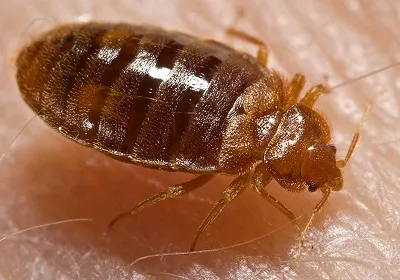
November 12, 2021When bed bugs infest your one and only home where you live, there is clearly an urgent need to get them removed right away. But what if they infest a property you own that you’re not living in? Tempted to let the bed bugs die off on their own, you might be wondering, “how long can bed bugs live in an empty house?”
How Long Does It Take To Get Rid Of Bed Bugs & Keep Them Away?
June 9, 2021Most people want to eradicate bed bugs from their house the moment they find out there’s an infestation. In addition to the inconvenience of dealing with the repercussions of bed bugs, it is also difficult to resume a normal social life until these pests are eliminated since they spread so easily. So if you’re currently dealing with a bed bug infestation and you’re eager to get over it, you may be wondering, “How long does it take to get rid of bed bugs?” In short, the answer is:

Are Murder Hornets Teaming up with Lanternflies and Stink Bugs to Ruin Your BBQ?
July 10, 2020Spotted Lanternflies Have Been Spotted! Here’s What to Do
July 26, 2019You may have heard in recent news that the Spotted Lanternfly has landed in Pennsylvania. This is true! An invasive species native to China, Bangladesh, and Vietnam, Spotted Lanternflies have made their way to 14 unsuspecting Pennsylvania counties, including Berks, Lancaster, Philadelphia, Dauphin, Montgomery, Monroe, and Lehigh counties.
We know what you’re thinking: it’s just another bug! Kill it and move on! With these little buggers, not the case. The PA Department of Agriculture has labeled spotted lanternflies as a dangerous invasive species and any sightings should be reported online or via phone at 1-888-4BADFLY.
CBS21 TV Bed Bug Interview
March 2, 2011Bed bug infestations up 500 percent in Lancaster County
“Bed bugs are taking over several major cities and now they’ve made their way to Lancaster County. Lancaster city’s health officer said she got a couple more cases Thursday. Looking at the big picture, though, the city was free of bed bugs in 2007. Now, they’re continuing to multiply. Two dead bed bugs were dropped off to Dominion Pest Control on Thursday, by homeowners extremely concerned about their discovery. However, these pests are nothing new for senior technician Christopher Kamarow. “It seems like as soon as I finish up with one job another one comes in,” said Kamarow. Lancaster County has become an increasingly popular destination for the insects during the last three years. Kamarow said their presence has increased by 500 percent, and people in the area are at a real disadvantage when it comes to stopping the trend.
“Most people are simply not aware of the fact that bed bugs are a real insect and how they tend to hitch rides from one place to another on us and our belongings … from hotel stays to international transit or even just public transit, intermingling luggage with other people,” said Kamarow. Lancaster city’s health officer admits there’s a growing problem in city homes. Kamarow said the bugs can crawl their way from one row-home to the next. Bed bugs like to travel. They’re not picky about their food source or their destination. “Rich, poor, clean or dirty, everyone is susceptible to bed bug infestation,” said Kamarow. Kamarow also said a watchful eye is the best line of defense. “You’ve got to be careful and conscious of your surroundings. And after a while, every dot or speck will be a bed bug.”
To see an interview with Chris and Dominion’s owner, Gregory Pettis, click on the Bed Bug Information Video.
Pest Control for Spiders
August 12, 2009There are dozens of spider species found in Pennsylvania, and eventually a few wind up in the home. At Dominion Pest Control we can help you prevent all kinds of pests from entering or invading your home or business, including spiders.
When it comes to pest control products for spiders, we use micro-encapsulated products such as Demand CS. It has a long-lasting residual and works great. To purchase Demand CS or to treat your home or office, give us a call today!
Carpenter Ants
February 20, 2008When it comes to Carpenter Ants, the biggest question many people have is, “Are they in the house or are they coming from the outside?” This is a great question, and there are some ways to try and figure it out. Carpenter Ants can be a real problem if they are nesting in the house. Before you start spraying everything you can find under the kitchen sink on these ants, let us make sure they are Carpenter Ants, and not some other species. If you have black (not dark brown) ants that can be different sizes when found, you probably have Carpenter Ants. The same colony can have small and big members. Size is not a real factor in determining if you have them, so do not spend a lot of time analyzing this variable. A better idea is to determine where they are coming from (we will talk about this later).
One the sure way of knowing that you have an infestation inside the home is if you find “flying ants” or “swarmers”, as we in the pest control industry prefer to call them. Flying ants inside are never a good sign. But before you get all worked up, make sure they are not termites. You will be thankful when you determine it is just ants if that is what it is! If you do determine that they are termites, call a professional company and consider having a professional treatment before you try to tackle them yourself. Mistreating a termite colony could cost you thousands of dollars in the long run. The easiest way to determine if you have ants (whether Carpenter Ants or other) is to look for three distinct body parts. With ants, the head, thorax and abdomen are all visible to the naked eye. Termites appear to only have two segments. However if in doubt, call in a pest control company to make sure. Most companies have a “free inspection policy” and will not charge to tell you what kind of bugs you have.
Another way to determine if the ants are nesting in the home is to note the time of year. If you have Carpenter Ants roaming around the house in the middle of the winter and it is cold outside, they are definitely not coming from the outside! This is also possibly something you will see in the late winter-spring. “Ok, what do I do now?” you ask, itching to kill these things. Well hold on, before we get into that, let’s talk about some habits these home-wreckers have.
The biggest thing you need to know about Carpenter Ants is that they need water to survive. Although their primary diet is dead insects, they will always need a water source. It is usually outside–such as a bird bath, a clogged gutter, poor landscaping or some other drainage issue. Worse yet, the water source may be inside. “What?” you may ask. It is true, it can be inside your home. Many times homeowners have told me horror stories about that tiny leak under the bathtub or kitchen sink they never knew about under one day… Carpenter Ants started showing up and someone suggested a leak. Or, it could condensation on pipes in a crawl space. And what about improperly sealed shower stalls? All these things contribute to attracting Carpenter Ants. They say to themselves, “Why live outside in the elements when we can live can live here with our primary staple (water).” They certainly are not stupid creatures, as King Solomon noted and encouraged lazy people to go and learn from them.
Another habit worth noting is that they are primarily nocturnal. Most of the ones you see during the day are just scouting the situation out. A lot of people report to me that they see them only in the early morning. This is the graveyard shift getting ready to clock out. They most likely found a gold mine in the sink from last night’s dishes that were washed.
Now let us talk about control. First, you must determine where the colony is hiding. It may be far away from the sightings and you may never find them without help. A good idea is to look outside during the late afternoon on the perimeter of your home for “ant trails”. If you find them going up the side of your home, follow them. Especially if they are carrying something like a dead insect-they are always going back to the nest with it and will lead you to some idea as to where it may be. It could be in the attic, or one of your eaves, a basement sill area, or simply between your walls. If you can find the nest and want to treat it yourself, using a powder or “dust” is one way to kill the colony by using a bulb-duster and pumping the powder into the hole on the outside where they disappear into. Sometimes though, this can make matters worse, you may end chasing them deeper into your house and then they manifest in areas you were not seeing them in before. Using a general spray insecticide can hold them off on the inside, but could end up causing the situation to become more severe with their speading-out in areas where they are not visible.
After treating Carpenter Ants for more than a decade, I do want to encourage you consider calling a professional who has access to professional products that may discourage the ants from moving around and dying right where they are. An example of this would be baits or non-repellents that act like a virus to the colony. If your concern is financial, please consider that mistreating Carpenter Ants could result in serious damage to your home long-term, and translate into repairs that seriously out-way the cost of a professional treatment. To learn more click on the video below.