Do Ticks Live in Lawns? What Pennsylvania Homeowners Should Know
August 17, 2026Yes, ticks do live in lawns, and they are not limited to forests or heavily wooded properties. In Pennsylvania, ticks can be found in tall grass, brush, landscaping, leaf litter, along the edges of lawns and even in open grassy fields with little or no tree cover.
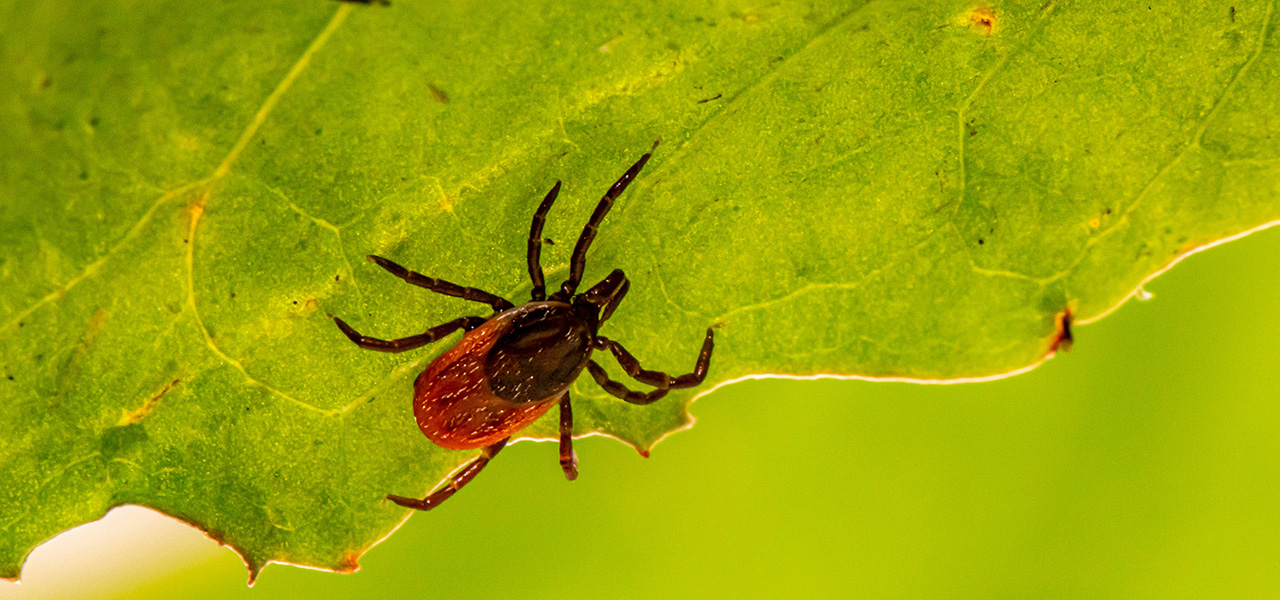
The type of tick you encounter often depends on the habitat. Blacklegged ticks, commonly called deer ticks, are strongly associated with wooded areas, leaf litter and the transition zones between woods and lawns. American dog ticks, however, are particularly well suited to open grassy environments. Penn State Extension notes that American dog ticks prefer open areas with little or no tree cover, including grassy fields and scrublands.
That distinction matters for Pennsylvania homeowners. A property does not need to back up to a forest to have a tick problem. If you’re finding ticks around your lawn, Dominion Pest Control can help identify likely tick habitat and provide targeted tick control services.
Why Are Ticks Often Found at the Edge of Lawns?
For blacklegged ticks, the place where a maintained lawn meets woods, brush or dense landscaping is particularly important.
Ticks are vulnerable to drying out, so many species do better where vegetation and leaf litter retain moisture. Pennsylvania’s Department of Environmental Protection identifies wooded areas, tall grass, brush, leaf litter, ground-cover plants, stone walls, woodpiles, and the edges where woods and lawns meet as common tick habitat.
These transition areas are also frequented by many of the animals ticks depend on for blood meals, including mice, chipmunks, deer and other wildlife. Household pets, especially dogs and outdoor cats, can also pick up ticks in these areas and carry them into other parts of the yard or closer to the home.
This is why a neatly mowed center lawn may present less favorable habitat for blacklegged ticks than:
- the last several feet of grass near the woods
- an unmowed strip behind a fence
- dense shrubs around a property line
- leaf litter beneath ornamental plants
- a shaded stone wall
- brush around a shed or outbuilding
- tall weeds along a drainage area
- woodpiles and other places frequented by rodents
The Primary Open-Grass Threat: American Dog Ticks
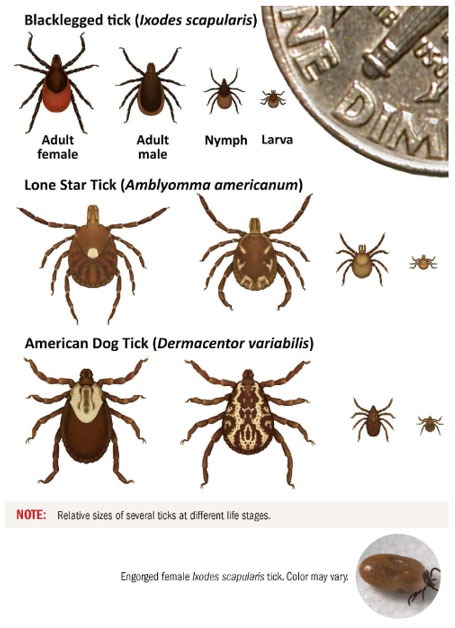
Image courtesy of Centers for Disease Control and Prevention (CDC)
When Pennsylvania homeowners ask whether ticks are in grass, American dog ticks are one of the most important species to understand.
The American dog tick (Dermacentor variabilis) occurs throughout Pennsylvania. Unlike blacklegged ticks, which are closely associated with wooded, brushy and edge habitats, American dog ticks prefer open locations with little or no tree cover, including grassy fields and scrublands.
In other words, you can encounter ticks in an open field even when there is not a tree in sight.
That makes American dog ticks particularly relevant around:
- larger residential lots
- tall or infrequently mowed grass
- vacant grassy areas
- field edges
- roadsides
- agricultural properties
- horse pastures
- cattle pastures
- sheep pastures
- grassy areas frequently traveled by dogs or wildlife
Open habitat should not be confused with very short, dry, closely maintained turf. Ticks generally need enough vegetation and humidity to avoid drying out. But a completely open grassy property is not automatically tick-free simply because it has no woods.
This is especially worth remembering throughout agricultural areas of Lancaster, York, and Lebanon counties. Adult American dog ticks feed on medium and large mammals, including dogs, deer, and domestic livestock. Small rodents are also important hosts for the tick’s immature stages.
Active pastures therefore provide something many people do not associate with tick habitat: an open grassy environment combined with a steady presence of potential animal hosts.
American dog ticks are most commonly encountered as adults during the warmer part of the year. They are also medically important because they can transmit the pathogens associated with Rocky Mountain spotted fever and tularemia. They do not transmit the bacteria that cause Lyme disease.
What About Blacklegged or Deer Ticks?
Blacklegged ticks remain extremely important in Pennsylvania, particularly because they can transmit the bacteria that cause Lyme disease as well as pathogens associated with anaplasmosis, babesiosis and other illnesses.
Their habitat preference, however, is somewhat different.
Pennsylvania DEP reports that adult blacklegged ticks are commonly found in forest-edge habitat and understory vegetation, while larvae and nymphs are often found in leaf litter. Penn State describes blacklegged ticks as occurring in wooded and brushy areas as well as grassy edge habitat.
So a useful way to think about your property is:
Woods, leaf litter and shaded lawn edges: particularly favorable to blacklegged ticks.
Open fields and grassy areas: American dog ticks become especially important.
Brushy borders and taller vegetation: potentially suitable for more than one tick species.
A yard can contain several of these habitats at the same time.
How Do Mice and Deer Bring Ticks Into Yards?
Ticks do not fly or jump from one part of a neighborhood to another. They depend heavily on animals to move them around.
Mice and Other Small Mammals
Small mammals are especially important to immature ticks.
Blacklegged tick larvae commonly feed on mice, chipmunks and other small animals. The white-footed mouse is also an important reservoir for the bacterium that causes Lyme disease. American dog tick larvae and nymphs likewise commonly feed on small rodents.
A mouse moving between woods, a stone wall, a woodpile, dense landscaping and the foundation of your home can therefore transport feeding ticks through several parts of a property.
Once a tick finishes feeding, it drops from its host and continues its development in the surrounding environment.
Deer
White-tailed deer are especially important hosts for adult blacklegged ticks. Deer can carry adult ticks across woods, fields, neighborhoods and residential properties. While deer don’t serve as a reservoir for the bacterium that causes Lyme disease, they provide transportation and a blood meal for the adult reproductive stage of blacklegged ticks.
So seeing deer regularly moving through a yard does not prove that ticks are present, but it does mean that a major tick host is visiting the property.
Dogs, Livestock, and Other Animals
Dogs are frequent hosts of adult American dog ticks, which is how the species received its common name. Adult American dog ticks also feed on deer, livestock, humans and other medium-to-large mammals.
Pets can also pick up ticks outdoors and carry them closer to the house.
Where Should You Look for Ticks Around Your Home?
If ticks are turning up on family members or pets, focus on the parts of your property where people, animals and vegetation regularly come together. That may include areas around sheds and outbuildings, fence lines, woodpiles, stone walls, pet runs, frequently used wildlife paths and, on rural properties, pasture boundaries or livestock areas.
Because different tick species favor different environments, there is no single feature that determines whether a yard has a tick problem. Repeated tick encounters are a better reason to investigate the property as a whole.
If you’re concerned about tick activity around your home, call Dominion Pest Control to assess likely problem areas and recommend a targeted tick pest control approach for your property.
How Can You Tell if Ticks Are Present in Your Yard?
Ticks do not produce the kind of obvious property damage associated with many lawn pests, so there usually is not a visible “tick infestation” sign in the grass.
More useful warning signs include:
- repeatedly finding ticks on family members after time in the yard
- frequently finding ticks on dogs or other outdoor pets
- finding ticks on clothing after yardwork
- regular deer or other wildlife traffic
- substantial mouse or vole activity
- tall grass or brush that provides suitable questing habitat
- wooded or brushy areas immediately bordering frequently used parts of the lawn
A single tick does not necessarily mean the yard has a large tick population. The tick could have been carried onto the property by a person, pet or wild animal. Repeated encounters, however, are a stronger reason to investigate where exposure is occurring.
The CDC notes that many people encounter ticks in their own yards and neighborhoods, not just while hiking or visiting forests.
How Can You Make Your Yard Less Attractive to Ticks?
You can reduce tick-friendly conditions around your home, but yard maintenance alone may not be enough to control an established tick problem. The goal is to make commonly used areas less hospitable to ticks while limiting the places where wildlife and rodents can carry them close to your family and pets.
The CDC recommends several practical steps:
- Keep grass mowed regularly. Shorter, drier turf is generally less favorable to ticks than tall, humid vegetation.
- Remove leaf litter and yard debris. Clear buildup along lawn edges, beneath shrubs and around outdoor structures where ticks can stay sheltered.
- Cut back tall grass and brush. Pay particular attention to fence lines, wooded borders, property edges and other transition areas.
- Create a buffer between lawn and woods. A roughly three-foot-wide strip of wood chips or gravel can help separate frequently used lawn areas from higher-risk tick habitat.
- Let in more sunlight where practical. Pruning dense shrubs and low branches can help reduce cool, damp conditions that ticks favor.
- Keep play and gathering areas away from brushy edges. Position playsets, seating areas and other frequently used spaces farther from tall grass, woods and dense landscaping when possible.
- Reduce places where rodents can shelter. Stack firewood neatly, remove unnecessary clutter and address areas that may attract mice and other small mammals.
- Check pets after outdoor time. Dogs and outdoor cats can pick up ticks in lawns, fields, landscaping and other areas around the property.
These steps can lower the likelihood of tick encounters, especially around the parts of the yard your family uses most. However, good landscaping practices are not the same as professional tick control. Ticks can remain active in areas that look well maintained, and new ticks can continually be introduced by deer, rodents, pets and other animals.
If you are finding ticks repeatedly around your home, Dominion Pest Control can provide targeted tick control for the areas where ticks are most likely to live and where your family and pets are most likely to encounter them. Combining smart yard maintenance with professional treatment offers a more complete approach than relying on mowing and cleanup alone.
A Mowed Lawn Is Safer, but It Is Not a Tick-Proof Barrier
Perhaps the most useful takeaway is that “ticks live in the woods” is only partly true.
A sunny, closely mowed lawn that is separated from woods and brush tends to be less favorable to blacklegged ticks. But Pennsylvania homeowners should not assume that every tick requires a forest environment.
Concerned About Ticks on Your Pennsylvania Property?
If ticks are turning up repeatedly on your family or pets, it may be worth looking beyond the center of the lawn and evaluating the entire property, including grassy areas, landscape beds, lawn edges, wildlife routes and other potential tick habitat.
Dominion Pest Control provides professional tick control services and yard pest control for homeowners throughout Lancaster, York, Lebanon, Berks, Chester, Cumberland and Dauphin counties. A property-specific approach can help identify the areas most likely to be contributing to tick exposure and determine the appropriate strategy for reducing activity around the places your family and pets use most.