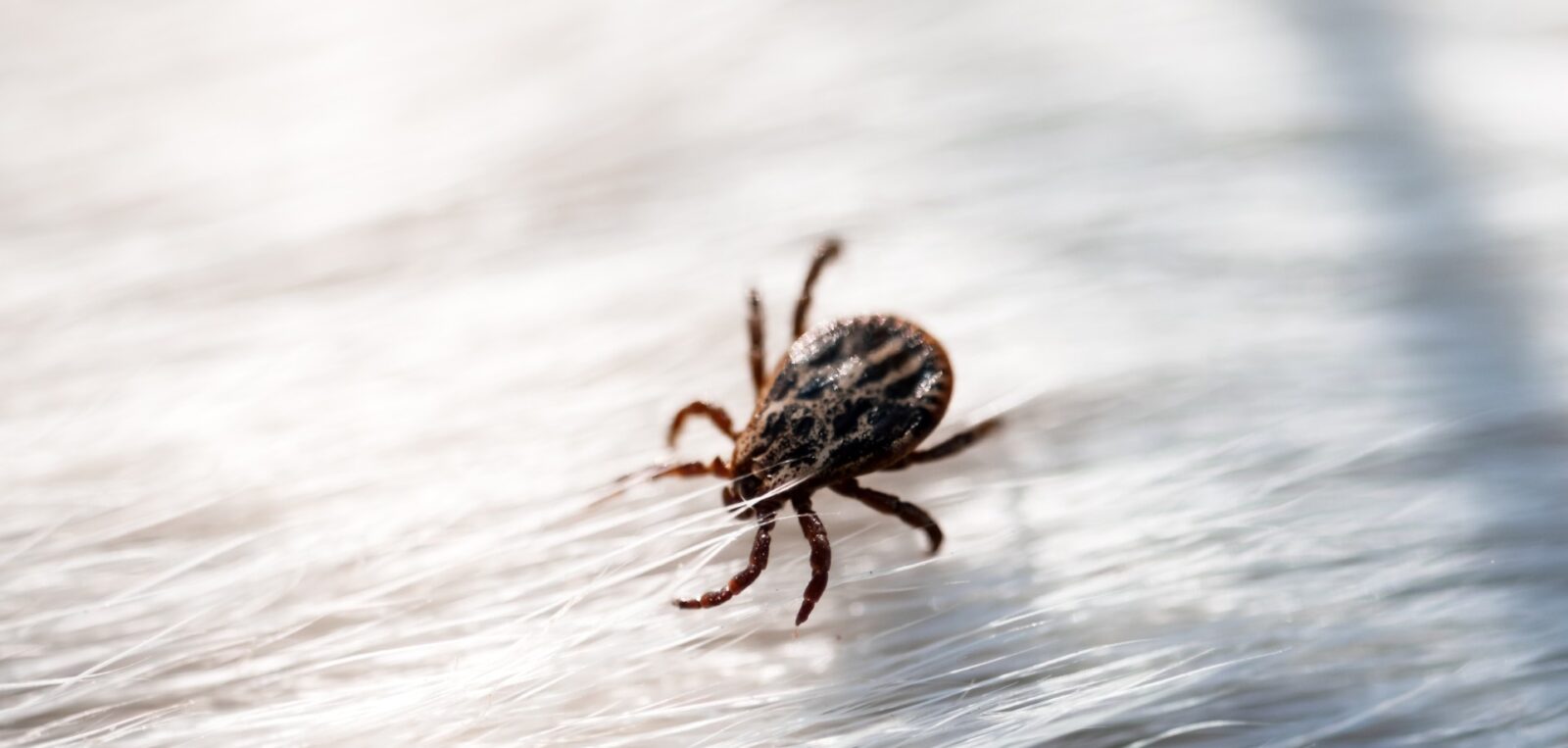
How Long Can Ticks Live in Your Yard in Pennsylvania
August 24, 2026Ticks can survive in a Pennsylvania yard for months and, in some cases, more than two years, depending on the species, life stage, host access, and environmental conditions.
Because ticks survive long periods between blood meals and endure freezing temperatures, a tick problem won’t simply disappear after a few weeks of mowing or the first hard freeze. Finding ticks today doesn’t mean they arrived recently; it often signals an ongoing, multi-season population.
If you’re repeatedly finding ticks around your home, on your pets, or after spending time in your yard, Dominion Pest Control can help identify likely problem areas and provide professional tick control to reduce ongoing activity.
How Long Do Ticks Actually Live?
Tick lifespans vary by species, but two are most common in Pennsylvania: blacklegged ticks (deer ticks) and American dog ticks.
- Blacklegged Ticks: Complete a 2-year life cycle across four stages: egg, larva, nymph, and adult. They feed on small animals (mice, chipmunks) as larvae, a broader range of wildlife as nymphs, and large mammals (deer) as adults.
- American Dog Ticks: Exceptionally resilient. Penn State Extension reports that unfed American dog tick larvae can survive 15 months, nymphs 20 months, and adults up to 30 months between hosts.
Can Ticks Live in a Yard All Winter?
Yes. Pennsylvania winters do not reliably kill ticks. Ticks become active whenever temperatures rise above freezing, making bites possible year-round.Adult blacklegged ticks are particularly active in fall, winter, and early spring. Ticks survive cold snaps by taking shelter in leaf litter, soil-level debris, and dense vegetation, waiting for favorable conditions to return.
Why Do Tick Problems Persist?
A persistent tick problem is driven by three main factors:
- Off-Host Survival & High Reproduction: Ticks spend most of their lives off hosts, molting or laying eggs in the environment. A single female American dog tick can lay 4,000 to 6,000 eggs after feeding.
- Wildlife Reintroduction: Ticks don’t stay in one place. Deer, mice, chipmunks, and pets constantly drop fed ticks into new areas and bring fresh ones onto your property.
- Staggered Life Stages: Different life stages are active at different times of the year. What seems like a “new” infestation in summer or fall is often just the next stage of an existing population becoming active.
Where ticks are living on the property also matters. Learn more about where ticks commonly hide in lawns, landscaping, and yard edges in our guide, “Do Ticks Live in Lawns? What Pennsylvania Homeowners Should Know.”
Does Finding One Tick Mean You Have an Infestation?
Not necessarily. A single tick may be a one-off visitor brought in by wildlife. However, repeated sightings or ticks regularly found on people or pets are a good reason to have a professional exterminator evaluate the property.
Will Mowing the Lawn Get Rid of Ticks?
No. Mowing and clearing leaf litter helps by making sunny areas less hospitable to ticks, but basic yard maintenance won’t eliminate a persistent population. Ticks will simply retreat to wooded edges, shady landscaping, and brush, while wildlife continues to bring in new ones. (Ticks may also live in mulch and garden beds)
Yard maintenance reduces habitat; targeted treatments actively reduce the tick population.
When Does Professional Tick Treatment Make Sense?
Professional management is recommended when ticks become a recurring threat rather than an occasional encounter, especially if your property borders woods, has high wildlife traffic, or features high-use play areas.
For homeowners interested in reducing the use of conventional pest-control products, Dominion offers treatment options using Nature-Cide® green pest control products. These professional-grade botanical formulas use ingredients such as clove, cedar, cottonseed, and cinnamon oils to target ticks and fleas while also helping deter mosquitoes and other nuisance insects.
Because proper application matters, Dominion’s technicians can determine where treatment will be most effective and whether a Nature-Cide® solution is a good fit for your property.
Don’t Wait for the Problem to Resolve Itself
Because ticks overwinter easily and can survive well over a year without a host, waiting for them to clear out on their own rarely works.
If you are repeatedly finding ticks on your Pennsylvania property, Dominion Pest Control can evaluate your yard, identify high-risk zones, and implement a targeted management plan to keep your family and pets safe all season long.